
For Malaysia-based service teams
Custom workflow automation that removes operational bottlenecks
If your team is still chasing updates across WhatsApp, spreadsheets, CRM records, job sheets, and approval chains, the issue is usually not effort. It is workflow design. We help service businesses in Malaysia connect the steps that slow teams down and make service delivery harder to manage.
- WhatsApp-aware customer updates
- Scheduling, dispatch, and approval routing
- CRM, reporting, and operational visibility

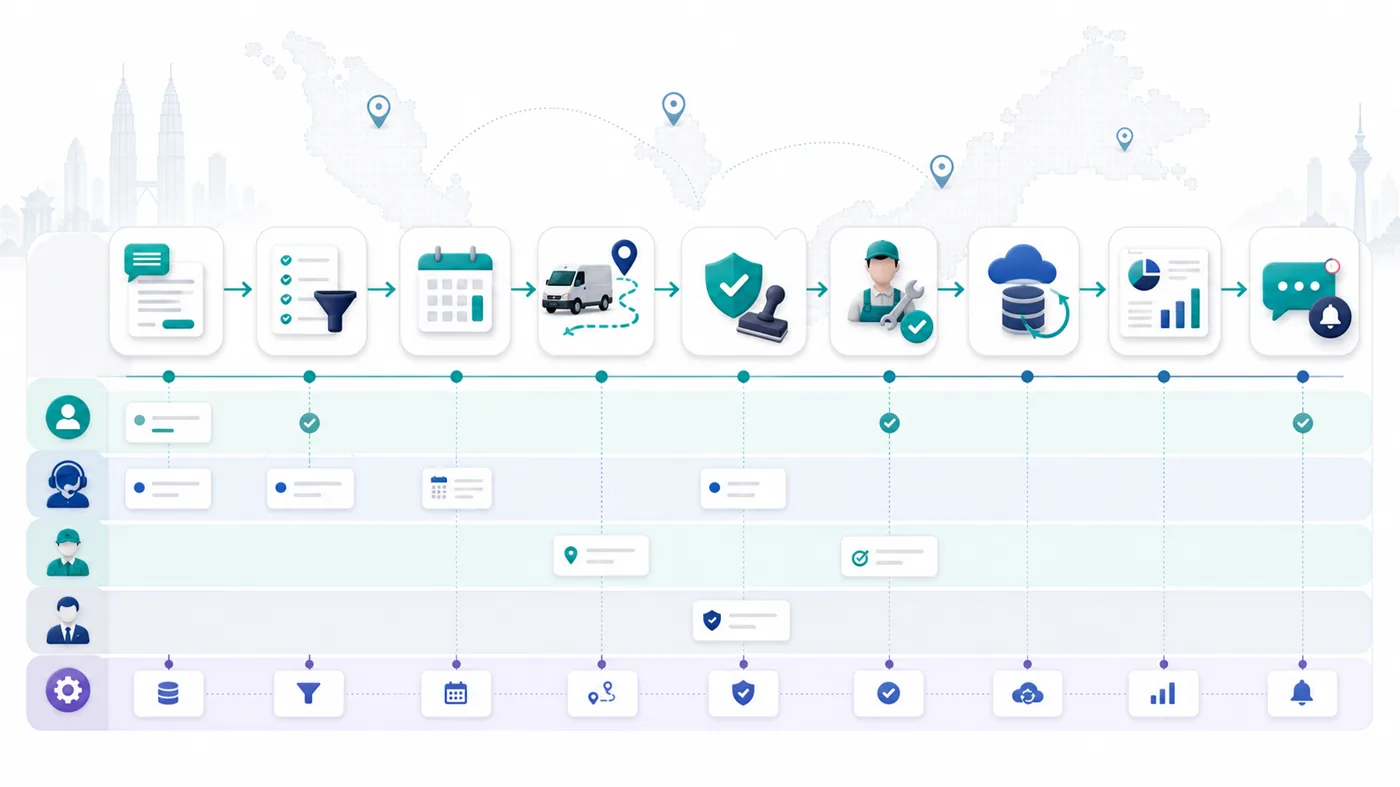
Where service delivery usually breaks down
Manual work hides risk until a customer complains
Most service businesses do not have one big systems problem. They have many small gaps between teams, tools, and approvals. Those gaps create delays, rework, missed updates, and weak visibility.
WhatsApp messages are useful, but job details do not always make it into the CRM or job tracker.
Schedulers, coordinators, and field teams work from different versions of the truth.
Manager approvals slow down quotes, exceptions, discounts, or urgent dispatch decisions.
Customers ask for updates because the process is quiet until something goes wrong.
Reporting is reactive, manual, and too late to fix the week in progress.
What we do
We design and implement practical automation around your service workflow
This is not a generic no-code demo. We work from your operating reality: how leads arrive, how jobs are assigned, how approvals move, how customers are updated, and how management tracks outcomes.
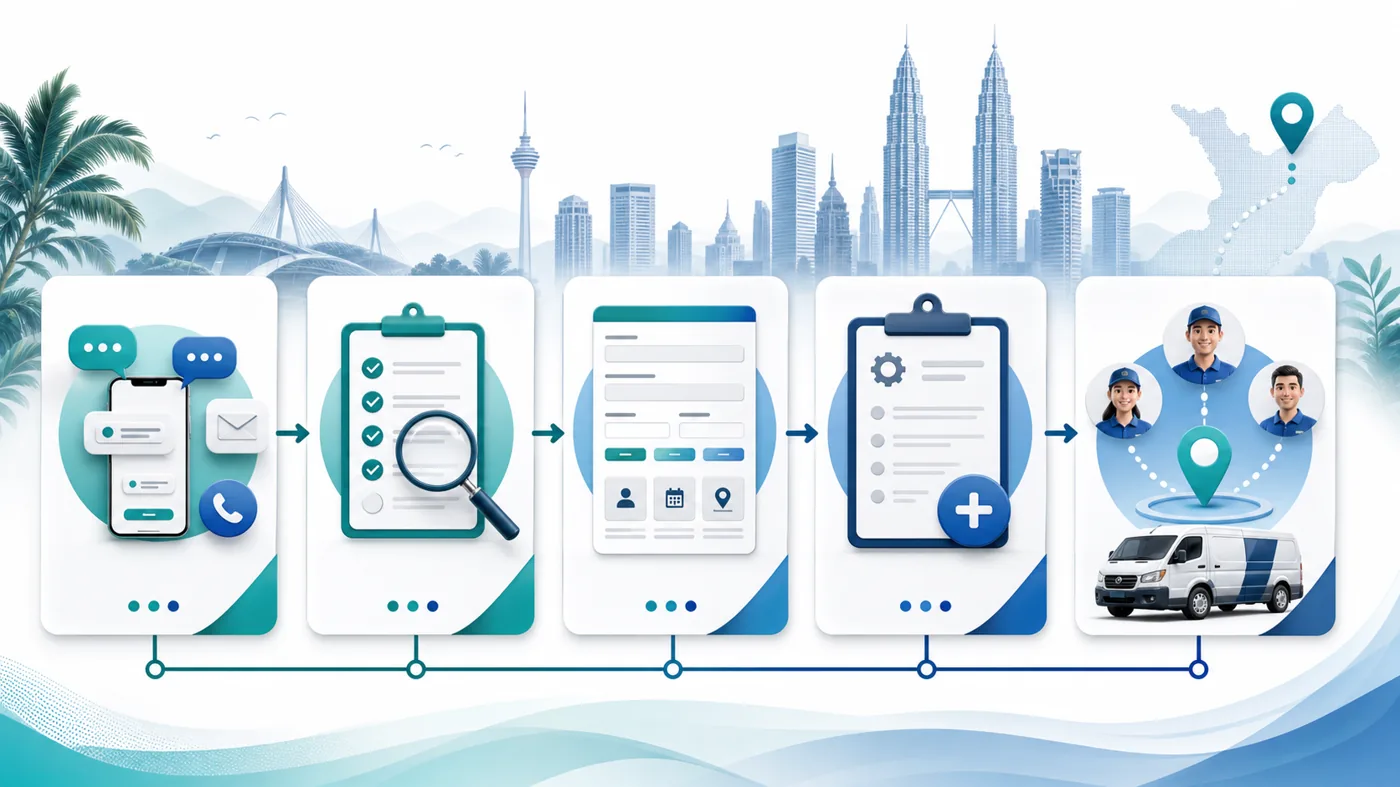
Workflow discovery for enquiry, scheduling, dispatch, service delivery, and follow-up.
Integration planning across CRM, forms, internal tools, notifications, and reporting.
Approval logic, role-based visibility, and escalation paths.
Pilot-first delivery so your team can validate value before scaling.
Core automation outcomes
What a better workflow looks like in practice
The goal is not to automate everything. The goal is to automate the steps that waste time, reduce confidence, or make service quality inconsistent.
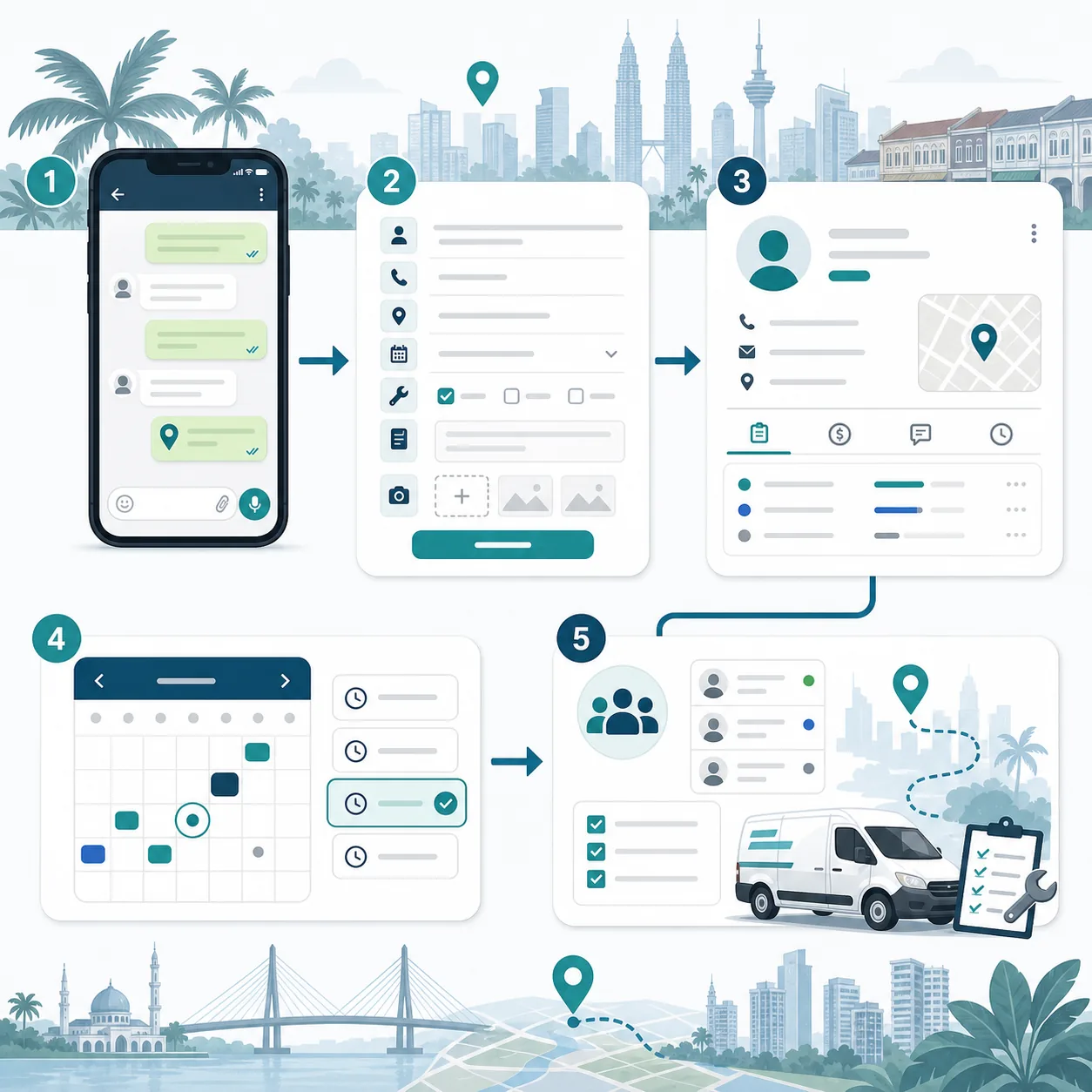
Lead and enquiry routing with structured data capture from web forms or approved channels.
Automatic creation or update of CRM records and service requests.
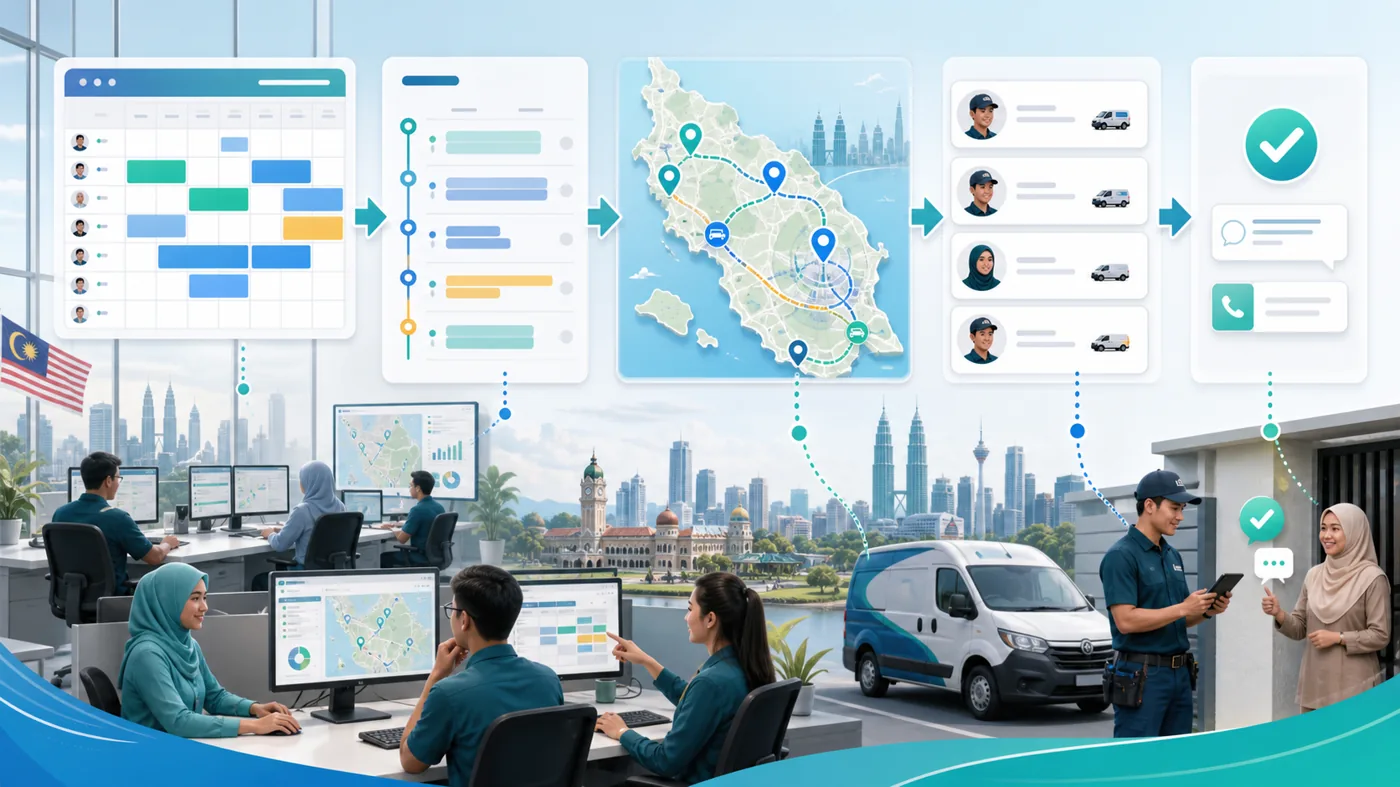
Scheduling logic that reduces back-and-forth with coordinators and customers.
Dispatch support with cleaner handoff data for field or fulfilment teams.
Customer updates triggered at the right milestones instead of manual chasing.
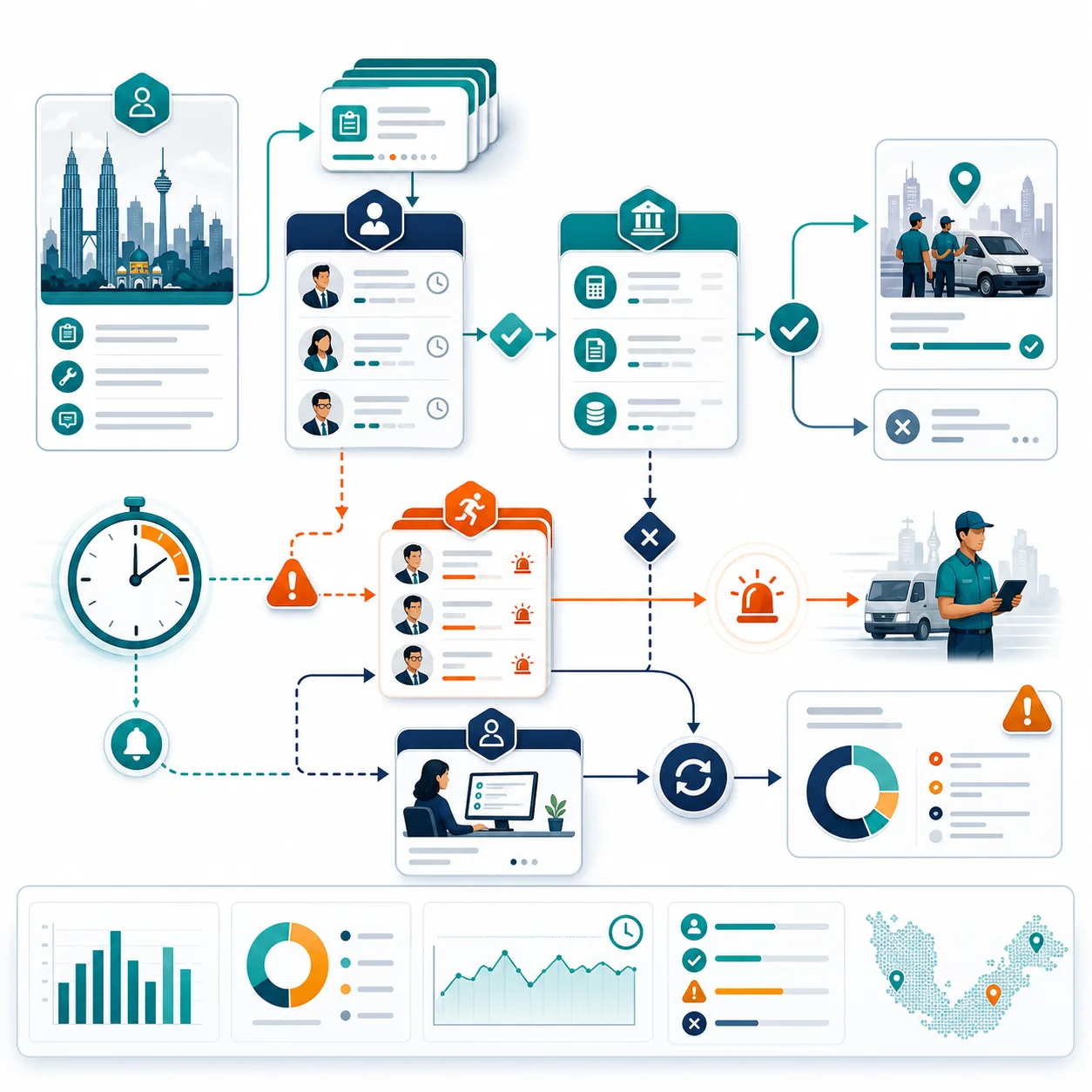
Exception handling for cancellations, delays, urgent jobs, or missing documents.
Built for real operating teams
Different stakeholders need different visibility
A useful workflow serves the people doing the work and the people managing the risk.
Operations
Operations teams need fewer handoffs, cleaner task ownership, and faster exception handling.
- Shared job status
- Fewer duplicate entries
- Clear next actions
Management
Managers need visibility before service levels slip.
- Approval queues
- Delay patterns
- Escalation triggers
Customer-facing teams
Sales and service coordinators need accurate updates without chasing multiple systems.
- Connected CRM notes
- Status-ready responses
- Consistent follow-up
How engagements typically run
A phased process that reduces implementation risk
We prefer a structured rollout over a rushed rebuild. That keeps your team aligned and makes adoption easier.
Discovery: map lead sources, service steps, approval points, and reporting needs.
Workflow design: define triggers, owners, exceptions, customer updates, and data movement.
Pilot build: implement the highest-impact workflow first.
Testing and refinement: validate edge cases, approvals, and operational handoffs.
Scale-up: extend successful patterns into adjacent workflows and management reporting.
A practical buying lens
Manual coordination vs connected workflow automation
Many teams can function with manual coordination for a while. The cost shows up later in delays, inconsistent service, and management blind spots.
Manual approach: staff check multiple channels, re-enter details, and follow up by memory.
Connected workflow: information moves once, updates are triggered automatically, and exceptions are easier to surface.
Manual approach: approvals depend on chasing the right person at the right time.
Connected workflow: approvals route by rule with a visible queue and escalation path.
Manual approach: weekly reporting is assembled after the fact.
Connected workflow: management gets clearer live visibility into volume, status, delays, and outstanding actions.
Additional capabilities
Useful workflow layers beyond the basics
Once the core process is stable, the next gains often come from better control and reporting.
Quote and approval routing for exceptions or non-standard requests.
SLA checkpoints and reminder logic for overdue actions.
Customer document collection and pre-service confirmation steps.
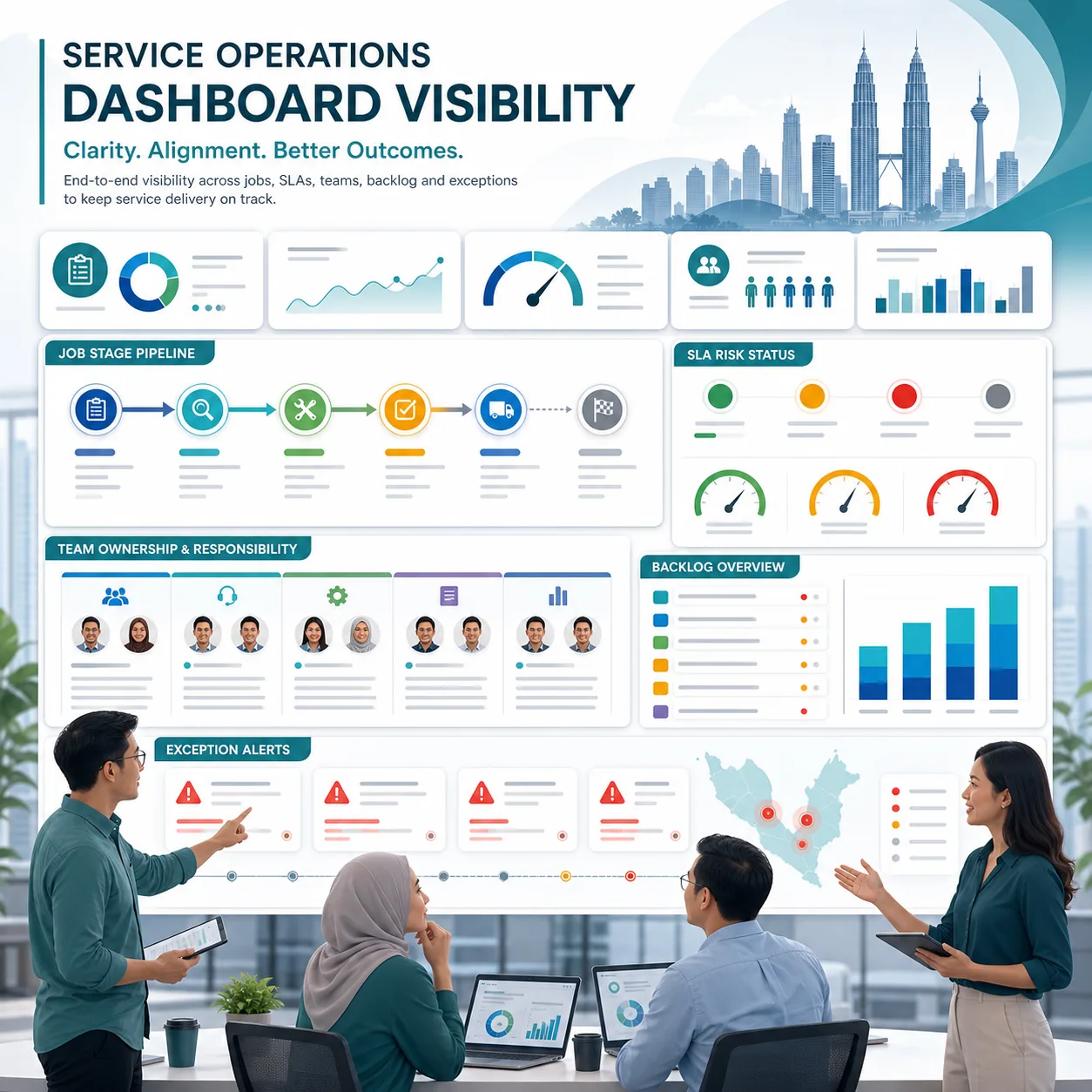
Management dashboards by branch, team, service line, or job stage.
Post-service follow-up, issue logging, and service recovery workflows.
Finance handoff triggers for invoicing or payment status updates.
Common workflow scenarios
Examples of service operations we can streamline
The exact workflow depends on your business model, but the recurring patterns are familiar.

What buyers often want to see
The strongest case studies show workflow change, not just technology change
When reviewing examples, focus on operational improvement: faster response times, cleaner handoffs, fewer missed approvals, and stronger visibility for management. For the companion implementation guide, read how Malaysian operations teams should scope the first AI workflow automation build. For an audit-led example before automation, read how to audit a customer-service workflow before you automate it with AI. For a clearer decision framework on when a team should start with an AI pilot, a governed rollout, or workflow automation first, read our guide for mid-sized teams. For the companion decision framework on modernising legacy operational flows, read when a legacy workflow needs an API layer, a sync job, or a full migration.
Reduced time from enquiry to confirmed job or appointment.
Fewer manual follow-ups between coordinators, field teams, and supervisors.
More consistent customer updates during waiting periods or schedule changes.
Clearer reporting on backlog, service status, and overdue actions.
See more examples in our case study library.
Engagement models
Choose the right starting point for your workflow maturity
Actual scope and pricing depend on systems, workflow complexity, and integration depth. These options help buyers understand how an engagement can begin.
Discovery Sprint
For teams that need workflow mapping, bottleneck diagnosis, and a practical automation roadmap.
- Current-state workflow review
- Priority use-case identification
- Recommended architecture and next steps
Pilot Build
For teams ready to implement one priority workflow such as scheduling, approvals, or customer updates.
- Focused implementation scope
- Operational testing and refinement
- Initial reporting visibility
Multi-Workflow Rollout
For businesses that want a broader service operations improvement programme across teams or branches.
- Phased rollout plan
- Cross-team workflow design
- Management reporting and governance
Why this matters
Operational confidence is a real commercial advantage
Service businesses do not win only on lead generation. They win when delivery stays reliable as volume grows. Better workflow design helps protect that reliability.
Faster follow-up creates a better first impression for customers.
Structured approvals reduce confusion and avoid unnecessary escalation.
Connected reporting gives leaders more control over service quality and turnaround times.
Customer updates reduce uncertainty and inbound status chasing.
Teams spend less time coordinating and more time moving work forward.
Frequently asked questions
Questions service businesses in Malaysia often ask before starting
If you are considering workflow automation, these are usually the right early questions.
What is workflow automation for a service business?
It is the design of connected steps that move work automatically from enquiry to job completion. For service teams in Malaysia, this often includes WhatsApp lead capture, scheduling, approvals, dispatch, CRM updates, invoice triggers, and customer status messages.
Can you connect WhatsApp, forms, and our CRM?
Yes. We can connect approved lead sources, website forms, CRM records, notifications, and operational tools so your team does not need to retype the same data in multiple places.
Do we need to replace all our current systems?
Not always. Many projects start by improving the flow between the systems you already use. If a tool is creating friction, we can also recommend a better-fit stack as part of the engagement.
Which businesses is this best for?
It works well for field service, maintenance, healthcare support, education services, property operations, logistics coordination, home services, agencies, and other service businesses with repeatable steps and handoffs.
How long does a typical automation project take?
A focused pilot can often be scoped in a short discovery cycle and delivered in phases. The exact timeline depends on the number of workflows, systems, approvals, and reporting requirements involved.
Can you build approval flows for managers and finance teams?
Yes. Approval routing is a common use case. We can map requests, budget checks, manager approvals, escalation rules, and audit visibility so decisions move faster without losing control.
Will our team still have visibility after automation goes live?
Yes. Good automation improves visibility instead of hiding work. We structure dashboards, alerts, logs, and status views so managers can see jobs, bottlenecks, SLA risk, and follow-up needs.
Ready to improve operational flow?
Let us map the workflow that is slowing your service team down
If your coordinators, managers, and customer-facing staff are working around system gaps every day, we can help you design a cleaner process. Start with a discovery conversation and we will identify the best first workflow to automate.